Memorie Nervi 1945
We live here. We are enclosed within the present sorrow..... Will future ages ever attain such freedom, And feel themselves derived from all that happened, Even from us, and that this was good? W.H.Auden "Poems: In time of War", Ed. Guanda 196, pag. 119
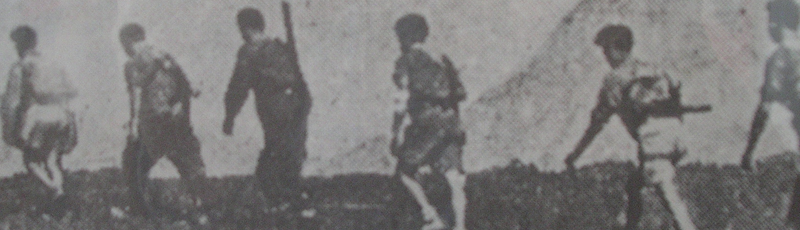
September 1920 (from L'occupazione delle fabbriche by Paolo Spriano, Einaudi 1964, pp. 72-73) "In Genoa and its surroundings, 100,000 metalworkers are employed.... unlike their Turin comrades, the workers of Genoa are less organized in trade unions, and quite divided, moreover, within their organized vanguards. There are three Chambers of Labor in Genoa (one in the area extending to Nervi, the second in Sampierdarena, the third in Voltri). In the first, a prevalence of the 'autonomous' socialists of Genoa with a strong reformist tendency is evident. In the second and third, the prevalence is instead of maximalist socialists." From Corriere Mercantile, 8 August 1922: “While in the city the blackshirts were carrying out their swift and overwhelming actions, a strong contingent of squadristi went to Nervi, occupying that municipality without encountering opposition. The socialist administration was declared dissolved, amid the enthusiastic applause of the crowd. Now even there, the beautiful tricolor flag reigns supreme.” May 1938: From 3 to 9 May, Hitler's visit to Italy. 50 Abyssinians hosted by the Duce in Nervi, Hotel Savoia, to honor the head of fascism during his visit to Genoa on 14 May 1938. Mussolini extols the collaboration between fascism and Nazism "...destined to leave their mark on this century." (Luigi Salvatorelli and Giovanni Mira, Storia d'Italia nel periodo fascista, Ed. Mondadori). Among them, the son-in-law of the Negus, Ras Gugsa. Departing from Genoa, the Duce passes through Nervi, applauded by a numerous crowd (oral testimony). 14 June 1940: French cruisers bombard Genoa without any reaction from Italy. February 1941: On 9 February, British ships from the Gibraltar squadron heavily bombard Genoa. Great alarm in Nervi, which however emerges unscathed. 22/23 October 1942: Massive RAF bombings on Genoa. Nervi once again is saved. August 1943: Further Allied bombings on Genoa. Summer 1943: In 1943, the best hotels are requisitioned by the occupiers (the Kriegsmarine at the Vittoria and the army at the Eden), with the exception of the Savoia, which, while continuing to function as a hotel, hosts several German officers, including Field Marshal Kesserling and subsequently General Meinhold, who will sign the act of surrender to the Genoese partisans. The Savoia is saved thanks to the merit of the German naval colonel Waldemar Lutje, who, together with three other officers (and orderlies), will remain at the Savoia until the end of the German occupation. Guests, mostly evacuees from Genoa, are allowed to stay (a unique case in Nervi). During the Second World War, Nervi remains a relatively 'happy' island, as it is never bombed despite being close to Genoa. Food is scarce and access to the coast becomes very difficult. The Promenade is closed with barbed wire and partly mined. Many wealthy Genoese and Swiss citizens move to the hotels of Nervi to enjoy greater security while still being able to work in the city by tram. August 1943: Anglo-American bombings on Genoa. Nervi remains intact. February 1944: A decree is issued imposing the death penalty for deserters and draft evaders in the Italian Social Republic. April 1944: The death penalty is extended to anyone who assists the partisan brigades. 22 April 1944: From the records of telephone calls made by Westphal to General Fritz Wentzell in Germany, it appears that on the 22nd, Field Marshal Kesserling stayed overnight at the hotel in Nervi, on the 23rd at the Excelsior in Rapallo, and on the 24th, after stopping in La Spezia, in Livorno. May 1944: On 15 May, a member of the GAP, disguised as a German officer, carries out an attack at the Odeon cinema in Genoa, reserved for the exclusive use of the occupiers. There are five dead and fifteen wounded among the Germans. Reprisals and searches also take place in the hotels of Nervi. Fifty-nine people are taken from the Marassi prison and killed in reprisal at the Passo del Turchino. A month earlier, the Benedicta massacre occurred, where a total of 246 people died. German roadblocks, roundups, and searches by the Black Brigades also occur in Nervi. August 1944: Visit to Nervi of Field Marshal Kesserling, with the installation of a direct telephone line to Hitler's Führerhauptquartier. Visit of Marshal Rodolfo Graziani. On 7 March, he reviews the 'Brescia' battalion in Nervi, headed for the western front. Visit of Major General Meinhold, who will return in August 1950. 24/25 April 1945: The armistice is signed by Gen. Meinhold; the Germans surrender to the Genoese partisans, but the troops stationed in Nervi, the batteries of Monte Moro, and other units in the city refuse the surrender. Gen. Meinhold is condemned to death by Hitler for high treason. Around 2 p.m. the next day, two British destroyers open fire on the Monte Moro batteries, which, in responding, hit some houses in Quinto, causing the last casualties. The surrender occurs a few hours later. Evening of 25 April 1945: The Allies arrive. It is the 92nd Buffalo Division that arrives in Nervi, already liberated by the partisans, around 10 p.m. on 26 April 1945. The first American arrives at the Savoia. He is Major Hill. Witnesses of the time say that he later settles in Portofino and never leaves Italy. On 28 April, at the headquarters of the Pubblica Assistenza di Nervi in via Gazzolo, the Germans sign the surrender. Plaque dictated by Emanuele Massone 'Piemonte' and located along Provincial Road n. 67 in the municipality of Lumarzo (locality Cornua) in the province of Genoa. Risking the most unheard-of tortures and death, men of unequal age and station but of equal sentiments of humanity, to redeem the human race from the tyrannies and barbarities of Nazifascism and to bring freedom, justice, fraternity, and peace among peoples, on the summit of this hill under the starry sky, now in the shadow of the pale moon, now in the fury of the wind and rain, sometimes in the freezing snow, from the rivieras and the mountains they gathered here, and the dawn of 25 April 1945 marked victory over a barbarous army deemed invincible, may it be a warning to nostalgics that brute force does not win, but the will of the people wins. This marble, as a perpetual memory, was placed by the partisans, ANPI sections of the municipalities of Lumarzo - Sori - Uscio - Recco - Avegno - Camogli - Bogliasco - Pieve - Nervi. Download document "" See photo "" and " " (1.12.20 - 18.8.44) Shot in Nervi by the Alpini Monterosa Division (13.2.27 - 24.4.45) Fallen in Genoa Sestri Ponente in combat. Aldo Casotti 'Monello' ( - 12.8.44) Fallen in combat at Varzi (PC) 'Peter' (12.9.12- 24.4.459) Fallen in Nervi in combat near the Hotel Eden. 'René' (2.3.17 - 18.1.44) Fallen in combat at Mondovì. Draft evader of the R.S.I. (11.7.25 - 16.8.44) Shot in Bogliasco by the Alpini Monterosa Division. (in completion: shortly, audio testimonies from witnesses of the time)
Gallery
Memorie Nervi 1945 — resistenza
Documents
Approfondimento: Memorie Nervi 1945 PDF
Documento di approfondimento relativo a “Memorie Nervi 1945”.
Editorial information
- Historical source
- Parco Culturale di Nervi
- Original page
- 1920_45.html
- Digital curator
- Parchi di Nervi
- Licence and rights
- CC BY-ND 4.0; third-party material retains its respective rights